
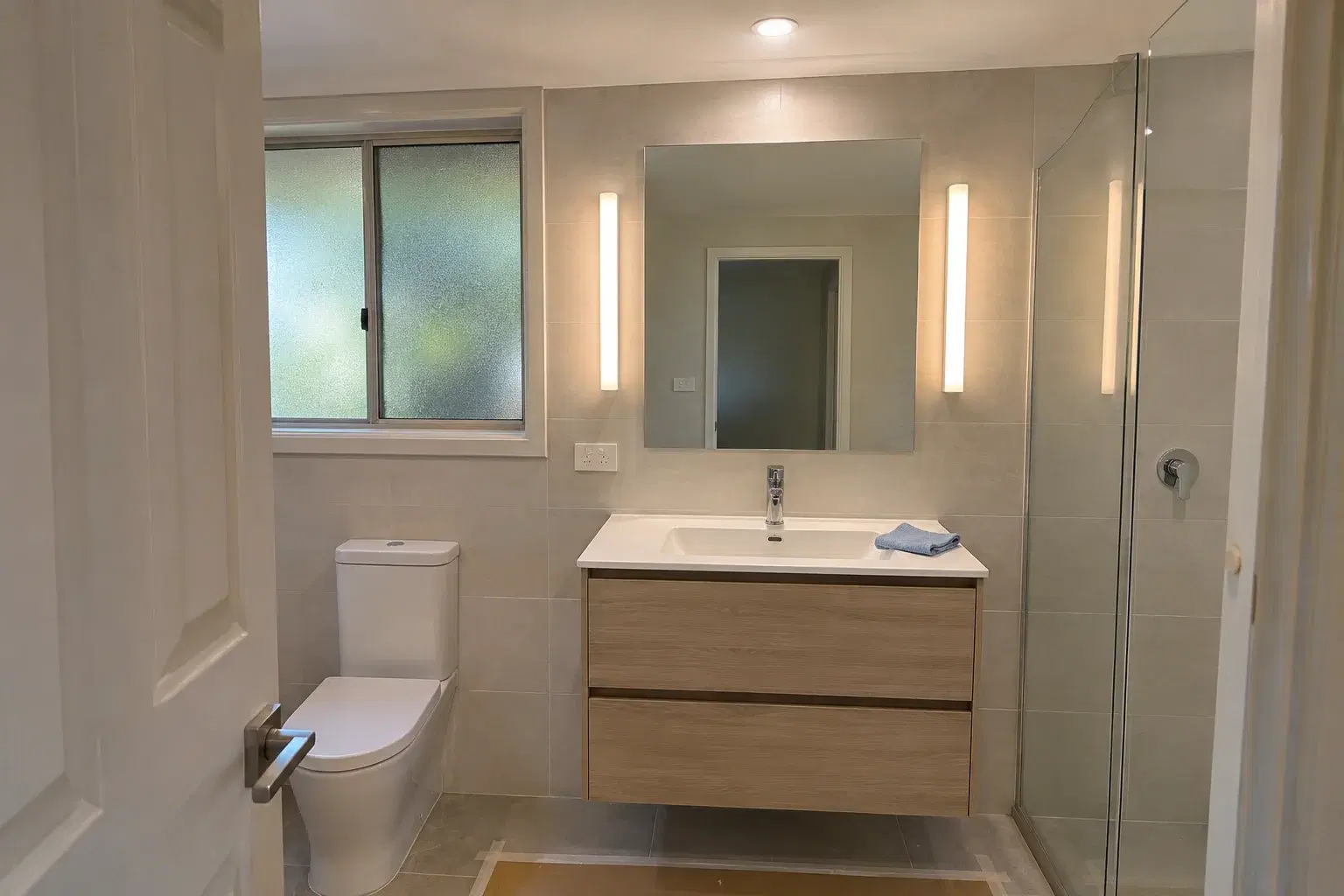
Think about the moments you use your bathroom before you think about the fittings. Getting ready before work, helping a child brush their teeth, cleaning the shower and visiting at night ask different things of the same room. A useful lighting plan gives you clear light where you need it, softer light when you want it, and controls that make both easy to use.
Start with the routine, not a grid of downlights
Stand at the proposed vanity position and picture a normal morning. Where is your face in relation to the mirror? Will a shaving cabinet project from the wall? Does the shower screen block light? These are more useful starting questions than how many downlights will fit evenly across the ceiling.
Mark the mirror, basin, shower, storage and door swing on the plan before setting light positions. In a small bathroom, a few well-placed fittings can be more useful than a ceiling full of bright spots. In a family bathroom, think about two people using different parts of the room at once.
- Morning: clear, even light for shaving, skincare and getting ready
- Cleaning: enough light to see the shower, corners and floor
- Evening: a softer setting for winding down
- Night visits: a low-glare option that does not light up the whole room
Give each layer of light a job
General light helps you move around safely. Task light supports close work at the mirror. Accent or low-level light can make an evening visit more comfortable. These layers can work together without every fitting being on at once.
For a modest bathroom, start with good general illumination and useful vanity lighting. Add a dimmable or low-level option if the budget allows. A niche strip or glow beneath a vanity is a finishing touch; it should not have to do the work of the main light.
Light your face at the mirror
A light directly above your head can leave shadows beneath your eyes and chin. Diffused lights beside the mirror, or a suitable fitting above it that sends light towards your face, are worth considering. Try the effect at your actual standing height rather than choosing from a product photograph alone.
Check what an illuminated mirror actually lights. A decorative halo behind the glass can look attractive without supplying enough forward light for grooming. Ask to see it operating and compare it with a mirror or wall light designed for that task.
- Allow space for wall lights beside the mirror or shaving cabinet
- Check glare and reflections from your usual standing position
- At a double vanity, make sure both positions receive useful light
- Ask about colour rendering as well as brightness, particularly for makeup
Choose the light colour alongside your tiles
Colour temperature describes the appearance of white light; it is different from brightness. Around 3000 K is a warmer starting point, while around 4000 K looks more neutral. Neither is automatically right for every bathroom. Compare samples with your tiles, vanity and skin tones before committing.
For mirror lighting, a published CRI of 90 or above is a useful feature to ask about when accurate colour matters. Keep the overall effect considered: a cool mirror surrounded by much warmer downlights can feel disjointed. Selectable-colour fittings are useful only if someone checks and sets them at handover.
Plan switches and dimming before the walls close
If everything operates from one switch, your only choices are often too bright or completely dark. Separating the main light from the vanity or evening light gives you more useful control. Check that the selected LED fittings, drivers and dimmer are compatible rather than assuming every LED dims well.
Walk through the entry sequence. Can you reach a light before stepping into the room? Will an open door hide the switch? If you want a low-level night light, decide how it is switched and whether a sensor would be helpful or intrusive. Leave access for drivers and replaceable components.
- Agree on switch positions with the final door and cabinet layout
- Keep a simple everyday setting that visitors can understand
- Test dimming for flicker, noise and usable minimum brightness
- Record fitting details so matching replacements are easier to source
Coordinate daylight, water zones and the ceiling layout
Daylight can make a room pleasant to use, but check the night-time result too. Frosted glazing, blinds and a skylight change privacy and daylight; they do not replace useful mirror lighting after dark. Reflective tiles and mirrors can also turn an exposed bright light into an uncomfortable reflection.
Have the electrician confirm fitting suitability, wet-area locations, required protection and clearances for the actual bathroom. Electrical work in Queensland must be carried out by appropriately licensed people. Do not choose a fitting solely because its packaging says bathroom or waterproof.
Spend first on the light you use every day
If the budget is tight, prioritise clear mirror light, comfortable general light and sensible switching. Decorative pendants and illuminated niches can wait until those basics work. Ask for the lighting allowance to identify the actual fittings and controls so you can compare quotes properly.
Before fit-off, review the lights alongside the exhaust fan, heater, ceiling framing and shower screen. Each item needs a sensible position. A three-in-one unit may provide useful general light, but its central ceiling position will not necessarily provide the vanity lighting you want.