
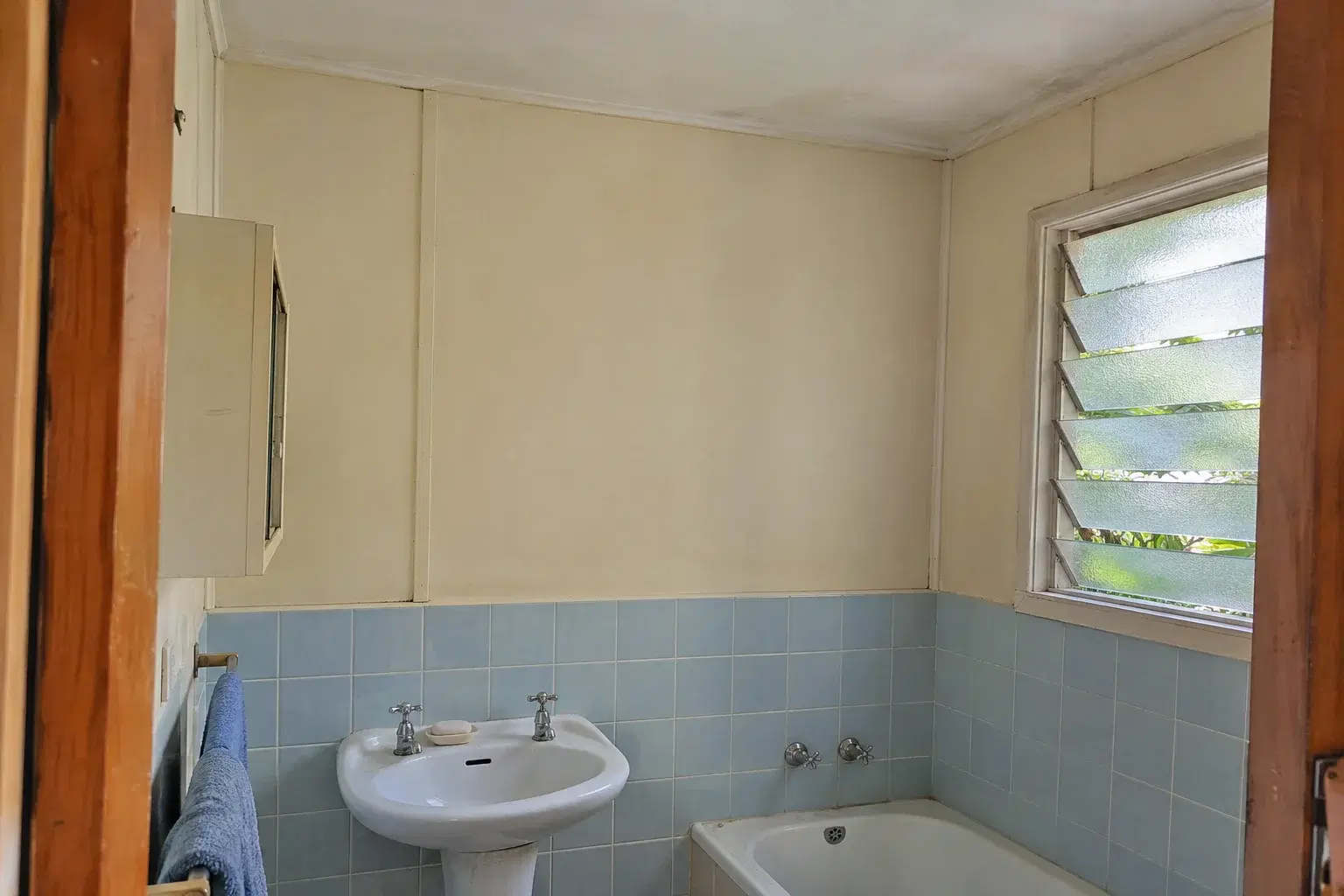
Before an older bathroom is stripped out, the wall and ceiling linings deserve as much attention as the new tiles. Asbestos-containing materials remain in many older Queensland homes, sometimes behind finishes that have been changed several times. Finding them early allows testing, specialist removal where needed and the renovation programme to be planned properly.
What asbestos is and why it was used
Asbestos is a group of naturally occurring minerals with strong, heat-resistant fibres. It was used in building products because it added durability and resistance to heat. In older bathrooms it may be present in cement sheet wall or ceiling linings, floor products or other concealed materials.
A home built or renovated before 1990 is a reason to investigate, not proof that every sheet contains asbestos. Australia's ban on new asbestos products took effect on 31 December 2003; it did not remove material already installed in homes.
Why ordinary demolition methods are different
The concern is breathing in fibres released when asbestos-containing material is disturbed. Breaking, drilling, cutting or sanding an old sheet can turn a material that was previously sealed into an exposure risk. Dust may also move beyond the room being renovated.
Bonded, or non-friable, asbestos has fibres bound within another material such as cement. Friable material is more readily crumbled and releases fibres more easily. Both need assessment; neither should be treated as ordinary renovation rubble. Intact material that will remain undisturbed may be managed in place, but demolition changes that decision.
You cannot identify it by colour or a photograph
Paint, tiles and replacement fittings can hide the age of a wall lining. A sheet that looks like ordinary fibre cement may or may not contain asbestos. A photograph, building age or product nickname cannot provide a reliable answer.
Arrange professional assessment and safe sampling where needed, with analysis by a NATA-accredited laboratory. Ask what the sample covers: a result from one wall does not automatically identify every ceiling, floor layer or later patch. Do this before strip-out and before new fan holes or lighting penetrations are cut.
Can old asbestos sheeting simply be covered?
Leaving sound, sealed material undisturbed can sometimes be appropriate. That is different from covering it during a renovation that still needs drilling, new plumbing, tile removal or changes to the substrate. A new surface does not make the hidden material asbestos-free.
Have the proposed work assessed before choosing between retaining, managing or removing a lining. If material remains, keep its location documented for future trades. Do not assume another layer of tiles or paint removes the need to identify and plan around it.
The Queensland removal rules to know
Under Queensland's work health and safety rules, removing more than 10 square metres of non-friable asbestos requires an appropriately licensed removal business. A class B licence covers that non-friable work; class A licence holders can also do it. Friable asbestos removal requires a class A licence.
The area refers to the asbestos material being removed, not the floor area of the bathroom. Several walls and a ceiling can add up quickly in a small room. Limited provisions for small quantities do not remove safe-work and disposal duties. Our bathroom renovation process uses appropriately licensed asbestos professionals when removal is required.
Allow for notification and clearance
Licensed removal normally requires the removalist to notify Workplace Health and Safety Queensland at least five days before starting. Specific urgent-work exceptions exist, but an ordinary planned renovation should allow for notification rather than assume work can begin immediately.
After licensed removal, the area needs a clearance inspection and certificate before normal reuse. Class B work uses an independent competent person; class A work requires an independent licensed asbestos assessor, with the relevant air monitoring requirements. Confirm who arranges the clearance and when the renovation trades can return.
What bathroom asbestos removal usually costs
Our current bathroom renovation FAQ uses a planning allowance of around $2,000–$3,000 plus GST for asbestos removal, depending on the material, quantity and site conditions. This is a guide for our renovation enquiries, not a fixed price or a Brisbane-wide market rate. A separate removal quote follows testing and confirmation of the scope.
Ask exactly what is included in that quote. Sampling and laboratory analysis, specialist removal, access arrangements, transport, disposal and clearance should be clearly addressed. New wall or ceiling linings, waterproofing, tiling and other reconstruction are separate items to confirm within the renovation scope.
- Quantity and location of the confirmed material
- Bonded or friable condition and any contamination
- Stairs, access, site protection and the occupied parts of the home
- Removal, lawful disposal and the required clearance arrangements
- Any testing or rebuilding costs that sit outside the removal quote
Keep asbestos waste out of ordinary renovation rubbish
Asbestos waste needs an authorised disposal route. Brisbane City Council's resource recovery centres do not accept it, and it must not go into household bins or an ordinary mixed renovation skip.
Have the removal contractor explain the transport and disposal arrangements for your job. Keep the laboratory result, removal documentation and clearance certificate with your renovation records. These help you understand what was removed and what may remain elsewhere in the home.
Build the asbestos check into your renovation plan
The practical order is to discuss the age and renovation history, assess suspected materials, arrange testing, agree on any specialist removal and confirm clearance before the affected area is rebuilt. That makes the extra cost and programme easier to understand before demolition begins.
Finding asbestos does not decide the whole renovation outcome. It means the existing material needs to be handled through the correct process before new plumbing, linings, waterproofing and finishes cover the room again.