
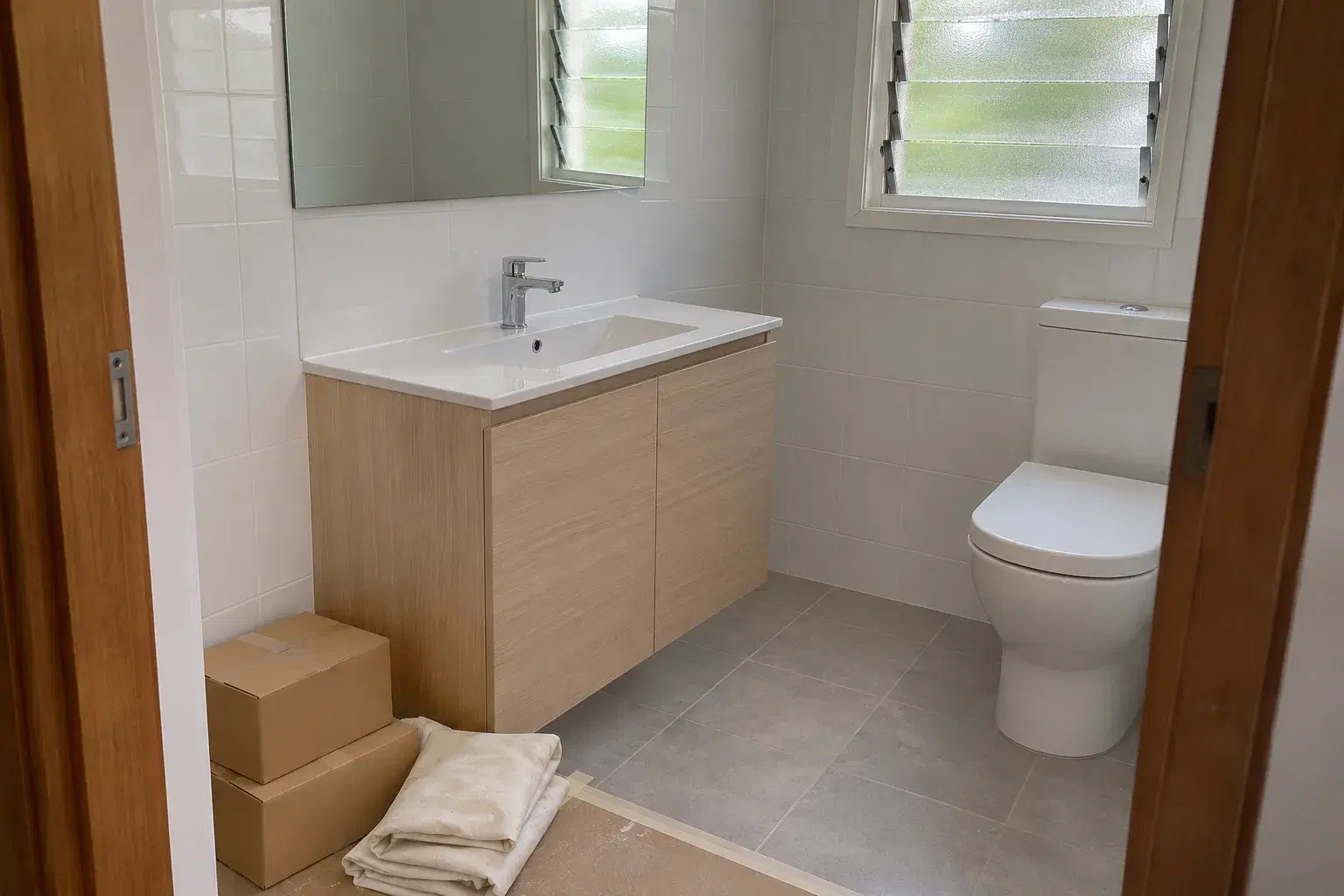
Yes, you can supply your own fixtures for a Best Brisbane Bathrooms renovation. The current pricing guide allows for this, with the fixed quote adjusted for the items you supply. The useful next question is what to check before paying. A basin, mixer and vanity can each look right on a shopping page yet still need careful coordination in the room. Whether you are renovating in Brisbane or Ipswich, agree on the products, responsibilities and delivery dates before a sale deadline makes the decision for you.
Agree on the supply list before you shop
Start with a written list showing who supplies each item. Include the toilet, vanity, basin, tapware, bath, shower fittings and accessories. Separate the visible finish from the parts needed to install it. A photograph of a mixer does not tell you whether its concealed body is included.
Ask the renovation team to review the exact model codes and installation sheets before ordering. Keep one shared selections list with the finish, size, supplier, inclusions and approval status. If a retailer substitutes a similar model, send it back for review rather than assuming the original approval covers it.
- Which items are included in the renovation quote?
- Which items will you buy and deliver?
- Who supplies wastes, connectors, concealed bodies and other required parts?
- When must each approved item be available on site?
Check WaterMark and WELS separately
WaterMark certification concerns plumbing product suitability for use in Australia; WELS provides water efficiency information. The Australian Government lists taps, showers, toilets and cisterns among the products requiring both. Check the exact product in the relevant databases, including a valid WaterMark licence and the WELS registration, rather than relying on a general claim about the brand.
Ask the seller for missing information before buying online. Keep the product specification and registration details with your selections list so the plumber can check the proposed installation. A water efficiency star rating alone does not establish that a fitting can be installed in your bathroom.
Do not confuse new-home ratings with renovation rules
Business Queensland lists minimum WELS ratings for fixtures in new dwellings, then expressly states that those requirements do not apply to renovations. Avoid treating the listed new-home ratings as a blanket minimum for every existing bathroom renovation.
That distinction does not remove the separate product certification and registration checks. Ask the plumber to confirm what applies to your actual scope. You can still compare water use when choosing products, even where the new-dwelling minimum ratings are not the rule for your project.
Match the toilet to the room and its connections
Ask the plumber to check the proposed toilet against the waste position, inlet location and finished wall and floor. Overall dimensions also matter: check the door swing, passage past the pan and access for cleaning. A toilet that looks compact in a showroom may project further into your room than expected.
Manufacturer instructions are specific to the model. For example, Caroma’s Cameo installation sheet describes its own S-trap set-out range and supplied connector, and requires a compatible cistern for the stated flush performance. Those details illustrate why a different suite cannot be approved from appearance alone. Obtain the current sheet for the exact model you intend to buy; do not use another toilet’s measurements.
Choose the basin, vanity and mixer together
Review these as a group. Ask the installer to check the basin’s tap holes and waste requirements, the mixer’s reach and height, the cabinet layout around the pipes and the space needed to open drawers. For a wall-mounted mixer, confirm the concealed components and the finished wall arrangement before rough-in.
Bring the installation sheets to the layout discussion. Check where everyday items will sit and whether a projecting basin or handle crowds the room. If you choose wall-hung cabinetry, ask the builder to confirm its fixing and support requirements before the wall is closed. Product approval should cover the complete combination, not just the colour.
Plan deliveries around construction stages
Ask for a required-on-site date for every item. Some selections affect service positions early; others are installed during final fit-off. Do not assume everything can be selected after tiling, or that buying everything months early is the best answer. Agree on the sequence with the team.
Check stock and delivery arrangements before ordering. On arrival, compare model codes and finishes with the approved list and inspect for visible damage using the supplier’s handling instructions. Photograph issues and contact the seller promptly. Keep packaging and paperwork as directed, and agree on a dry, protected storage location that leaves the access route clear.
- Confirm who receives and checks each delivery
- Tell the team immediately about damage, missing parts or delays
- Recheck substituted products before accepting them
- Agree how delivery problems affect the programme
Clarify fault handling without signing away your rights
Ask who you should contact if an owner-supplied product arrives damaged or develops a fault, and how the team will distinguish a product problem from installation work. Keep invoices, model details and installation records together. Read the warranty’s claim process and any conditions before purchase.
Do not assume supplying your own fittings means you lose all consumer rights, or that a warranty expiry ends every possible remedy. The ACCC explains that Australian Consumer Law guarantees arise automatically and warranties cannot remove them. The appropriate remedy depends on the circumstances; avoid relying on a blanket promise that every future removal, return visit or replacement will be free.
Compare the revised total rather than the sale price
Best Brisbane Bathrooms’ current planning range for a complete standard bathroom or ensuite is $29,000–$35,000 plus GST, including professional labour and standard materials. The pricing guide says you may supply your own fixtures and finishes and that the fixed quote is adjusted so you are not charged for those items. It does not promise a particular saving for a shopping package.
Ask for a revised written scope showing the items removed from supply, what installation work remains and any agreed changes. Add your own purchases and delivery costs when comparing the total. A site inspection and agreed selections are needed for a fixed quote; avoid simply subtracting your retail receipt from the general planning range.
Buying fixtures does not make the plumbing a DIY job
Keep purchasing and installation decisions separate. Queensland Government guidance includes bathroom plumbing renovations among the work commonly handled through the notifiable-work system and explains how to check a plumber’s licence. Have the licensed plumber confirm the work category and required paperwork for your project.
Before you place an order, bring the team your shortlist, suburb, room type and intended timing. If you have already bought something, disclose the exact model and delivery status early. It is easier to discuss suitability while the layout is still being planned.